Your Source For Making Wine and Beer

Showing posts with label Wine Recipes. Show all posts

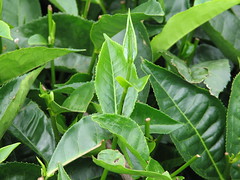
Green Tea and Ginger Wine

Sunday, October 03, 2010
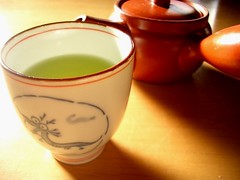

Photo by: Kanko

16 teaspoons or teabags of Green Tea
1 cup chopped white or golden raisins
1 ounce thinly sliced ginger root
2 lbs granulated sugar
zest & juice of 1 lime
zest & juice of 2 small lemons
water to 1 gallon
1 tsp yeast nutrient
1 pkt wine yeast


Boil water and pour over all ingredients but yeast (in primary). When water cools to under 100 degrees F., add activated yeast. When specific gravity drops to 1.015-1.010, strain tea, ginger and zest. Transfer liquid to secondary and attach airlock. Ferment to dryness, rack, top up, and reaffix airlock. Stabilize when clear. Wait 30 days, sweeten if desired, and rack into bottles. Allow 3-6 months to smooth out.


This recipe is Jack Keller's and can be found on his site Winemaking Home Page.


Read more...

30 Day Wine

Saturday, January 23, 2010

A quick and easy recipe for making a batch of wine that you can enjoy during the summer months.

* 24 oz Welch's frozen concentrated grape juice, thawed
* 3 cups sugar
* water to make up one gallon
* 1/2 tsp dry yeast
* 1 1-gallon glass jug.


Mix all ingredients together well with water filling jug to about an inch below the shoulders. Cover with a clean rag secured with rubber band. Keep in a dark place about 70 degrees. About 2 weeks later replace rag with a good thick piece of plastic wrap. After 30 days from starting date, siphon wine off from sediment in bottom and drink. For a good old "Mad Dog 20/20" type wine, add a pint of cheap blackberry brandy to the mix before drinking.


Have New Posts From Making Homemade Wine and Beer Delivered To Your Email

Read more...

Cinnamon Wine

Monday, November 16, 2009

cinnamon sticks

Photo by: view from 5'2"

* 12 six-inch cinnamon sticks
* 3 lbs granulated sugar
* 7-1/2 pts water
* 1 tsp yeast nutrient
* 1/8 tsp tannin
* 3 tsp acid blend
* 1 crushed Campden tablet
* Champagne wine yeast

Put cinnamon sticks and one quart water in a pot with a tight-fitting lid.


Bring to a simmer and hold for 10 minutes with the lid on, turn off heat, and let steep for two hours.

Strain the water into a secondary and discard the cinnamon sticks.

Add sugar to remaining water and bring to a boil.

Turn off heat and stir until sugar is dissolved.

Add all remaining ingredients to secondary except Campden and yeast and then pour in the sugar-water.

Cover with a napkin held in place with a rubberband and allow to cool.

Add Crushed Campden, stir, and allow to sit 24 hours covered.

Add activated yeast and recover.

Ferment 5-7 days, or until specific gravity falls below 1.030.

Fit with airlock and continue fermentation 30 days.

Rack into sanitized secondary, top up, and refit airlock.

Ferment another 3 months, rack again and ferment additional 3 months.

Stabilize, sweeten to taste, and let sit under airlock additional 10 days.

Rack into bottles and store in dark place.

Read more...

Corn Wine

Thursday, September 03, 2009


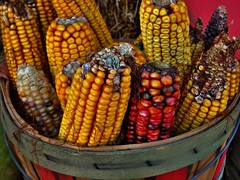
Photo by: r-z


* 2 lbs cracked corn
* 1 lb chopped golden raisins
* 3 lbs granulated sugar
* 4 tsp acid blend
* 1 tsp yeast nutrient
* 1/2 tsp tannin
* water to one gallon
* 1 crushed Campden tablet
* Champagne or Sherry wine yeast

Rinse the corn well, checking for any pebbles or other foreign matter. Put chopped raisins and corn in a bowl and cover with enough water to cover the corn. Soak overnight. The next day, pour corn and raisins in a fine nylon straining bag, tie the bag closed, and put in primary. Pour the soaking water into primary. Put remaining water on to boil with sugar in it. Stir well as water heats up until sugar is dissolved and water comes to a boil. Pour water into primary. Add the acid blend, yeast nutrient and tannin. Cover primary with a sheet of plastic held in place with a large rubber band or loop of elastic. When cooled to room temperature, add crushed Campden tablet, recover, and set aside for 24 hours. Meanwhile, boil a cup of orange juice, transfer to a sterilized pint jar and set in refrigerator 30 minutes to cool. When cool, add yeast to orange juice and cover with plastic wrap. After 24 hours, add orange juice to primary. Stir daily for two weeks. Remove bag of corn/raisins and allow to drip drain (do not squeeze). Discard corn/raisins, recover primary and allow liquor to settle overnight. Rack into secondary and fit with airlock. Rack every two months for six months. After sixth-month racking, check for dryness. If not completely dry (specific gravity of 0.990), allow another two months and rack again. When dry, bottle the wine. May drink immediately. [Adapted from Terry Garey's The Joy of Home Winemaking]


Have New Posts From Making Homemade Wine and Beer Delivered To Your Email

Read more...

Black Tea Wine

Thursday, August 27, 2009


Photo by: sarahemcc

* 4 tablespoons bulk black tea
* 1 11-oz can frozen red or white grape concentrate, depending on desired color
* 2 lbs sugar
* 2 tsp citric acid
* 6 pts water
* 1 tsp yeast nutrient
* 1 pkt wine yeast

Bring water to a boil and pour over the tea and sugar, stir well, and infuse until cool. Strain into primary, add grape concentrate, acid, nutrient and yeast. Cover and ferment until s.g. drops below 1.020. Transfer to secondary, fit airlock and ferment to dryness. Rack when wine is clear and completely dry, top up and refit airlock. Rack again after 45 days, stabilize, refit airlock, and set aside for 3-4 weeks. Sweeten to taste if desired and bottle.


Have New Posts From Making Homemade Wine and Beer Delivered To Your Email

Read more...

Eggplant Wine

Sunday, July 26, 2009


Photo by: Robyn Gallagher

* 4 lbs eggplant
* 2-1/2 lbs granulated sugar
* 1/2 oz citric acid
* 1/4 tsp tannin
* water to make 1 gallon
* 1 tsp yeast nutrient
* wine yeast

Boil 1 gallon of water

Thinly slice the eggplant.

Put sliced eggplant and sugar in primary fermenter

Pour boiling water over contents in primary fermenter

Allow to cool to room temperature

Add remaining ingredients and cover with clean cloth.

Ferment 3 days

Strain liquid into secondary fermenter

Rack every 30 days until wine clears

Read more...

Hard Apple Cider Recipe

Tuesday, October 16, 2007


It's not beer and it's not wine, but making hard apple cider is always fun. You can do it the old fashioned way by pressing the apples or you can purchase the apple cider. If you purchase the cider, just make sure that there are no preservatives in it. Personally, I buy the apple cider from a local fruit market.


The recipe I found is from Sallys-Place.com and will make a 5 gallon batch. There is also an interesting history of hard cider on that site that is worth reading.

Enjoy the recipe and the reading.


Cidermaking is easy and fun. Here is a basic recipe for a Farmhouse Style cider (ingredients for five gallons):

5 gallons of fresh pressed sweet apple juice (known today as apple cider)
5 cups of sugar
1 package of Wyeast liquid lager brewers yeast (available at homebrew supply stores)

Transfer the juice and sugar using a sanitized funnel or food grade plastic hose into a sanitized glass or stainless-steel container at room temperature. Allow the sugar to dissolve and then pitch the lager yeast and affix a fermentation lock atop the carboy It will soon begin to bubble away releasing carbon dioxide as the yeast converts the sugars into alcohol. Allow the cider to ferment and mellow for at least two months before transferring it with your sanitized food grade hose into bottles, a keg, or any vessel you prefer. Then enjoy. Any homebrew supply shop can get you started with the proper advice and equipment.


Technorati Tags: , , , ,

Read more...

Wine Recipe Index

Thursday, October 04, 2007

Index of all the wine recipes that have been posted on Making Homemade Wine and Beer.

Apple Cider Wine

Apple Wine Recipe

Apricot Wine

Banana Wine Recipe

Basil Wine

Blackberry Wine Recipe

Blueberry Port

Blueberry Wine

Burgundy Wine Recipe

Canned Cherry Wine

Concord Wine

Cornmeal Wine

Crabapple Wine

Cranberry Wine Recipe

Dandelion Wine Recipe

Garlic Wine

Ginger Wine Recipe

Gluhwein or "Glow Wine"

Grapefruit Wine

Jalapeno Wine

Lime Wine

Mint Wine

Oak Leaf Wine

Orange Concentrate Wine Recipe

Paw Paw Wine Recipe

Peach Brandy Recipe

Peach Wine

Pear Wine

Pear Wine Recipe

Pineapple-Orange Delight

Port Wine Recipe

Potato Wine

Quince Wine

Raisin Wine Recipe

Red Clover Wine

Sack Mead

Sangria Recipe

Strawberry Wine

Sweet Mead

Sweet Potato Wine

Sweet Wheat Wine

Tomato Wine

Tropical Wine

Universal Wine Recipes

Universal Wine Recipe Steps

Watermelon Wine

Watermelon Wine Recipe

Welch's Grape Juice Wine

Welch's Grape Juice Wine Recipe

Wine Cooler Recipe


Technorati Tags: , ,

Read more...

Sack Mead

Tuesday, May 29, 2007


Last in the Series


"If you like your meads sweet, light and true to their heritage, you'll love sack mead. The flavor is full of honey, you can alomost hear the bees buzz!! Because this mead is only flavored with honey, the tannin is an essential part of the recipe. Leave it out, and you may find the end result a bit insipid."

Makes 1 gallon

3 pounds orange blossom honey

1 teaspoon acid blend

1 teaspoon pectic enzyme

1 Campden tablet

1 package Montrachet yeast

1 teaspoon yeast nutrient

1 1/2 cups orange juice at room temperature

1/4 teaspoon grape tannin


In a large enamel or stainless steel pot, boil the hone in water (1 part honey to 2 parts water) for 10 to 20 minutes, skimming off any foam that forms. (the foam will contain water impurities and beeswax residue.)

Let cool, and then transfer the honey mixture to a 2 gallon fermenter. Add the acid, pectic enzyme and enough water to make 1 gallon. Add the campden tablet and let the mixture sit, well covered, for 24 hours.

In a jar, make a yeast starter culture by combining the yeast, yeast nutrient, and orange juice. Cover, shake vigorously, and let stand 1 to 3 hours, until bubly, then add to must.

Add the tannin and allow the mixture to ferment. We recommend racking meads after the most vigorous fermentation, siphon the wine into a 1-gallon airlocked fermenter. In about 3 months, rack again. In about six months, rack once again. Rack a final time right before bottling--about a year after fermentation started. Then bottle and cork the finished mead and store in a cool cellar.

Age for at least six months before opening a bottle.


Technorati Tags: , , , ,

Read more...

Sweet Wheat Wine

Tuesday, May 22, 2007


Fifth in the Series


"This wine is light and lively with hints of citrus and a nice, vinous character. The wheat supplies nutrients and sugars to enhance the fermentation process."

Makes 1 gallon

3/4 pound wheat berries

1 pound raisins or 1 pint white grape juice concentrate

2 1/2 pounds brown sugar

1 Campden tablet

1 package wine yeast

1 teaspoon pectic enzyme

1 teaspoon yeast nutrient

1 1/2 cups orange juice at room temperature

1 ounce citric acid


Soak the wheat berries overnight in 1/2 quart of water to soften them. Mince the wheat berries and raisins and transfer to a 2 gallon fermenter. Bring 2 quarts of water to a boil, pour it over the wheat-raisin mixture, add the brown sugar, and let cool. Add a Campden tablet and let sit, well covered, for 24 hours.

In a jar, make a yeast starter culture by combining the wine yeast, pectic enzyme, yeast nutrient and orange juice. Cover, shake vigorously, and let stand 1 to 3 hours, until bubbly, then add to the must.

Add the citric acid; then let the mixture sit, loosely covered, for ten days, stirring daily. Rack the mixture to a 2 gallon airlocked fermenter and allow it to ferment to completion. When fermentation stops, bottle, cork and cellar the wine.

Wait at least six months before sampling.


Technorati Tags: , , ,

Read more...

Cornmeal Wine

Thursday, May 10, 2007


Fourth in the Series


"Cornmeal wine is initially a bit slower to ferment than many other wines, so be patient with it. Once the fermentation gets going, it makes a good dry wine."

Makes 1 gallon.

2 lemons
3 oranges
1 1/2 pounds cornmeal
2 1/4 pounds sugar
3 pints grape juice concentrate
1/4 ounce ground rice
1 Campden tablet
1 package wine yeast
1 teaspoon yeast nutrient
1 1/2 cups orange juice at room temperature
1 teaspoon pectic enzyme


Grate the outer rinds of the oranges and lemons, discard the solids and the white outer rind. Squeeze the juice from the oranges and lemons into a 2 gallon plastic container. Add the grated rind to the container, along with the cornmeal, sugar, grape juice concentrate and rice. Add enough water to make 1 gallon. Add Campden tablet and let mixture sit, well covered, for 24 hours.

In a jar, make a yeast starter culture by combining the wine yeast, yeast nutrient, and 1 1/2 cups orange juice. Cover, shake vigorously, and let stand 1 to 3 hours, until bubly, then add to the must.

Add the pectic enzyme. Let the mixture sit for 30 days, loosely covered. Strain out the solids, transfer the liquid intoa 1 gallon airlocked fermenter and allow to ferment for 30 days. When fermentation is complete, bottle the wine, cork it and store in a cool cellar.

Wait at least six months before opening the first bottle.


Technorati Tags: , , ,

Read more...

Quince Wine

Tuesday, May 08, 2007


Third in the Series


This is a nice dry wine with hints of pear and apple in its flavor. For those who have never seen a quince tree, the fruit is yellow to yellow-green---it resembles a pear in color, though it doesn't have the classic pear shape. (The fruit looks something like a fat doughnut, with depressions where the whole should be on either end.)

Makes 1 Gallon

20 ripe quinces
2 1/4 pounds sugar
Juice and zest of 2 lemons
1 teaspoon pectic enzyme
1 Campden tablet
1 package wine yeast
1 teaspoon yeast nutrient
1 1/2 cups orange juice at room temperature


Grate the quinces as near the core as possible. Boil the grated peel and pulp in enough water to cover, for a maximum of 15 minutes. (Don't over cook the fruit or you may have trouble clearing the wine.)

Strain the mixture and pour the juice onto the sugar in fermenter. Add the juice and zest of the lemons. Let the mixture cool then add the pectic enzyme. Add a capmden tablet and let the mixture sit, well covered for 24 hours.

In a jar, make a yeast starter culture by combining the wine yeast, yeast nutrient, and orange juice. Cover, shake vigorously, and let stand 1 to 3 hours, until bubly; then add to must.

Add enough water to make 1 gallon and allow the mixture to ferment for 48 hours. Rack into an airlocked fermenter and let the wine ferment to completion (about nine months), racking at intervals as needed to clear the wine. When you are sure that fermentation is complete, bottle, cork and cellar the wine.

Age for at least six months before sampling.


Technorati Tags: , , ,

Read more...

Apricot Wine

Tuesday, April 24, 2007


Second in the series
"The apricot's intense flavor becomes mellow and full-bodied in wine. The lovely golden color is a plus."

3 pounds fresh apricots
1 1/2 pounds sugar
1 pound honey
1 pound high quality dried apricots chopped
Juice of 2 lemons
1 teaspoon lemon zest
1/4 teaspoon grape tannin
1 teaspoon yeast nutrient
1 teaspoon pectic enzyme
1 Campden tablet
1 package wine yeast

Cut fresh apricots in half, remove pits and cut the fruit into quarters. Put the fruit in the fermenter and cover with sugar. Mix 1/2 gallon of water with the honey in a suacepan and bring to a boil. Skim off the foam. When no more foam rises to the top, add the chopped apricots to the honey mixture and pour over the fresh apricots. Add the lemon juice, lemon tannin, yeast nutrient, pectic enzyme and Campden tablet to the mixture. Let stand for 24 hours.

Add the yeast and let the mixture ferment for one week, stirring daily. Remove the solids and pour the liquid into an airlocked fermentation vessel. Let ferment for one month. Rack again and let ferment for two months. Rack again then bottle, cork and cellar the wine.

Wait at least six months before sampling.

Makes 1 gallon

My Note - Dried apricots usually are treated with sulfites. Try to purchase untreated apricots.

Technorati Tags: , , ,

Read more...

Pineapple-Orange Delight

Tuesday, April 17, 2007


This is the first in the series of recipes from Making Wild Wines and Meads.

"The color is light, but the flavor is redolent of the tropics. Choose a ripe pineapple, one that will release a leaf of its topknot with a firm tug--or give the pineapple the sniff test. The flavor--and ultimately the bouquet of your wine--will be reflected in the aroma of the pineapple, you use"

Yield 1 Gallon

4 pounds ripe pineapple

1 tablespoon light brown sugar

4 ounces golden raisins, chopped

2 pounds orang-blossom honey

12 ounces ornage juice concentrate

juice of 1 lemon

1 teaspoon orange zest

1/4 teaspoon tannin

1 teaspoon yeast nutrient

1 teaspoon pectic enzyme

1 Campden tablet

1 package wine yeast


Chop and core the pineapple, and transfer to a 2 gallon plastic bucket. Add the sugar and raisins, and set aside.

In a medium saucepan, mix the honey in 1/2 gallon of water and bring to a boil. Skim off foam. When no more foam rises to the top, pour the honey-water mixture over the pineapple mixture. Add the orange juice, lemon juice, orange zest, tannin, yeast nutrient, pectic enzyme and Campden tablet. Let stand for 24 hours.

Add the yeast and let the mixture ferment for one week, stirring daily. Remove the solids. Pour th eliquid into an airlocked fermentation vessel and let ferment for 1 month. Rack again and let ferment for two months. Rack again. When fermentation is complete bottle.

Wait at least six months before sampling.


Technorati Tags: , , , ,


Read more...

Blueberry Port

Tuesday, April 10, 2007


6 pounds (12 cups) blueberries

1/2 cup Dry malt

4 cups granulated sugar

1/2 teaspoon acid blend

1/2 teaspoon pectic enzyme

1 teaspoon yeast nutrient

2 campden tablet

1 package Sherry or Port yeast

water


Crush the fruit. Add 12 cups of water and all other ingredients except the yeast. Stir well to dissolve sugar. Let sit overnight.

Specific gravity should be between 1.090 and 1.095. Sprinkle yeast over the mixture and stir. Stir daily for five days.

Strain the must and squeeze the juice out. Siphon into secondary fermentor, add water to make up volume and attach airlock.

Rack in three weeks, and every three months for one year. You must finish wine dry when making Port. Bottle

The wine is best if you can refrain from drinking it for one full year from the date it was started.


Technorati Tags: , , , ,

Read more...

Crabapple Wine

Tuesday, March 27, 2007

  • 6 pounds crabapples (about 6 quarts)
  • water
  • 2 campden tablets
  • 1/4 teaspoon pectic enzyme
  • 1 package wine yeast
  • 1 teaspoon nutrients
  • 3 pounds granulated sugar (about 6 3/4 cups)
  • honey


Crush apples -- DO NOT cut seeds open. Place in primary fermentor. Add enough water to cover apples. Crush and stir in campden tablets. Add pectic enzyme and stir well. Let sit overnight.

The next day, add yeast and nutrients. Stir. Leave for 5 days, stirring each day.

On the 6th day, strain and discard apples. Add sugar. Make up to one gallon with water. Specific Gravity should be 1.100. Put into secondary fermentor with an airlock. Three weeks after
fermentation has stopped, siphon off the lees. Mix 1/2 cup honey with 1 cup wine. Stir honey mixture back into the wine. Put back into secondary fermentor. Fermentation should begin again. If it does not, add 1/2 teaspoon nutrients.

If you want a sweet wine, repeat the honey addition one or two more times, until fermentation does not start again when honey is added. For a dry wine, Rack every three months and do not add more honey.

When wine is 6 to 12 months old, bottle. Wine is ready to drink one year after the date the batch was started.


Technorati Tags: , ,

Read more...

Basil Wine

Friday, March 16, 2007


  • 1 cup basil leaves, loosely packed
  • 2 11-oz cans frozen 100% white grape concentrate
  • 14 oz granulated sugar (to specific gravity of 1.085)
  • Water to make one gallon
  • 2-1/2 tsp acid blend
  • 1 Campden tablet, finely crushed and dissolved in 1/4 cup water
  • 1/4 tsp tannin
  • 1-1/4 tsp yeast nutrient
  • 1 pkt Champagne wine yeast


Wash fresh basil leaves and place in nylon straining bag and tie closed. Put all other ingredients except yeast in primary and stir well to dissolve. Cover primary and set aside 6-8 hours.

Add nylon straining bag, activated yeast, recover primary, and set aside for 5 days. Taste
and remove bag and discard leaves if basil flavor is sufficient. If not, leave bag in an extra day.

Recover primary until s.g. drops to 1.015. Transfer liquid to secondary, top up if required and fit
airlock. Ferment to dryness, then rack, top up and refit airlock.

Repeat every 30 days until wine clears and no new sediments form during a 30-day period.

Stabilize and sweeten to taste if desired (if sweetened, wait three weeks for any renewed fermentation to begin) and rack into bottles. Age 3 months before tasting. Serve chilled.


Technorati Tags: , ,

Read more...

Sangria Recipe

Tuesday, February 13, 2007

Sangaria


We finally got hit with a winter snow that amounts to anything and I've been outside most of the day either scrapping or shoveling. I'm in more of a "drinking" mode than "making" mode and thought I would pull out an easy drink recipe. Besides, I usually associate sangaria with summer and partying, not scrapping or shoveling snow.

So, Enjoy !!!

INGREDIENTS


* 1 lemon

* 1 lime

* 1 orange

* 1 1/2 cups rum

* 1/2 cup white sugar

* 1 (750 milliliter) bottle dry red wine

* 1 cup orange juice


DIRECTIONS


1. Have the fruit, rum, wine, and orange juice well chilled. Slice the lemon, lime and orange into thin rounds and place in a large glass pitcher. Pour in the rum and sugar. Chill in refrigerator for 2 hours to develop the flavors.

2. When ready to serve, crush the fruit lightly with a wooden spoon and stir in the wine and orange juice. Adjust sweetness to taste.


Read more...

Burgundy Wine Recipe

Tuesday, February 06, 2007

This was the first wine that I made using canned juice purchased from other than the grocery store. It took almost a year before it really mellowed out but it was worth the wait. Only wished that I had made more.


Burgundy

July 13 2003

Primary Fermentation was 7 Days


Quantity

Ingredient

46 ounces

Alexander’s Burgundy Juice

4 cans

Water

4 cups

Sugar

2 Teaspoons

Yeast Nutrient

1 ½

Campden Tablets

1 Teaspoon

Acid Blend

½ Packet

Narbone Yeast

½ Packet

Pasteur Red Yeast


Original Gravity 1.10


Vinometer Reading 15%


Secondary Fermentation 6 weeks


Bottled in Gallon Jugs August 29, 2003 along with Oak Chips

You might want to pair it with an Italian Onion Soup Recipe. Here are a couple to choose from:

The Recipe Link

Copykat.com

Recipeland.com


Perfect Brewing Supply

Read more...

Cranberry Wine Recipe

Tuesday, January 30, 2007


Crushin’ the net yesterday afternoon and stumbled on this recipe for Cranberry wine. Even though it is too late to enjoy it for this past holiday season, the cranberries are plentiful in the stores and now is the time to buy them. You can replace the Sultanas with golden raisins.

Cranberry Wine


  • Cranberries 1 lb
  • Water 1 Gallon
  • Sultanas (minced) 1.5 lb
  • Sugar 2 lb
  • Yeast
  • Yeast Nutrient
  • Citric Acid 0.5 tsp

Place the minced sultanas in a fermenting bin and cover in 2 liters of boiling water. Add the sugar and stir until dissolved. Add the acid and allow to cool. Cover the cranberries with boiling water and crush all of the berries. Pour into the fermenting bin and allow to cool. Once cooled, add the pectic enzyme and stir well. Cover and leave to stand for 24 hours. Add the yeast and nutrient and stir well and then cover and move to a warm place to ferment. After 10 days, strain off into a carboy and fit a bung and airlock and then leave in a warm place to ferment out. Clear and bottle the wine as usual once fermentation has completed.

If you happen to have a bottle of cranberry wine, you might want to pair it with this recipe:

Herbs & Goat Cheese

Read more...

  © Blogger templates Newspaper II by Ourblogtemplates.com 2008

Back to TOP